
As a retired emergency department nurse, this case of near-death experience (NDE) is of particular interest to me.
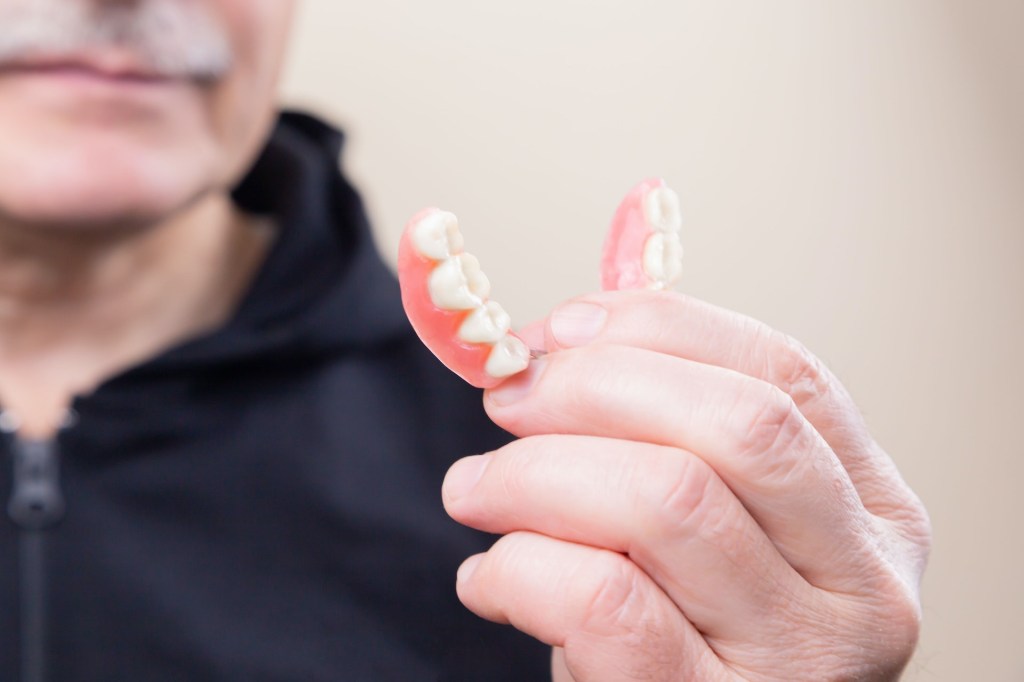
Partly because of the veridical aspects of the patients out-of-body experience (OBE) but also because the story involves a male nurse with 30 years of experience working in a coronary care unit….. and finally, because, yes, I have also lost several patient’s dentures during resuscitation attempts.
The original story was reported by Pim van Lommel in the 2001 Lancet medical journal. As we shall see, it is based on two separate documented interviews.
This is how it appeared in the Lancet article:
During a night shift an ambulance brings in a 44-year-old cyanotic, comatose man into the coronary care unit. He had been found about an hour before in a meadow by passers-by. After admission, he receives artificial respiration without intubation, while heart massage and defibrillation are also applied. When we want to intubate the patient, he turns out to have dentures in his mouth. I remove these upper dentures and put them onto the ‘crash cart’. Meanwhile, we continue extensive CPR. After about an hour and a half the patient has sufficient heart rhythm and blood pressure, but he is still ventilated and intubated, and he is still comatose. He is transferred to the intensive care unit to continue the necessary artificial respiration. Only after more than a week do I meet again with the patient, who is by now back on the cardiac ward. I distribute his medication. The moment he sees me he says: “Oh, that nurse knows where my dentures are”. I am very surprised. Then he elucidates: “Yes, you were there when I was brought into hospital and you took my dentures out of my mouth and put them onto that cart, it had all these bottles on it and there was this sliding drawer underneath and there you put my teeth.” I was especially amazed because I remembered this happening while the man was in deep coma and in the process of CPR. When I asked further, it appeared the man had seen himself lying in bed, that he had perceived from above how nurses and doctors had been busy with CPR. He was also able to describe correctly and in detail the small room in which he had been resuscitated as well as the appearance of those present like myself. At the time that he observed the situation he had been very much afraid that we would stop CPR and that he would die. And it is true that we had been very negative about the patient’s prognosis due to his very poor medical condition when admitted. The patient tells me that he desperately and unsuccessfully tried to make it clear to us that he was still alive and that we should continue CPR. He is deeply impressed by his experience and says he is no longer afraid of death. Four weeks later he left hospital as a healthy man.
Pim van Lommel, van Wees, Meyers, Elfferich, 2001,
Soon after publication, critics of the article responded that this was an anecdotal report with no attempt made to corroborate details with the patient and that the actual evidence was probably not as impressive as it initially seemed. The critisism continued with alternate explanations for the experience including:
- the patient regained some degree of consciousness due to effective CPR.
- The patient then felt his dentures being removed and heard them placed in a metal drawer, which then could be heard sliding shut.
- The man could see people in the resuscitation area when his eyes were opened by medical staff to check his pupil size.
- Being able to hear sounds and movements in the room he was able to build a mental model of what was going on.
- An OBE that was caused by the effects of hypoxia (oxygen starvation). Combined with the above sensory inputs and any previous medical knowledge or expectations.
Revisiting the case:
In the 2008 issue of the Journal of Near-Death Studies, Rudolf H Smit revisited the case by accessing documents from the original interviews with the nurse. He was also able to establish contact with the nurse to get a first-person account.
You an read Smit’s paper in full here: Corroboration of the Dentures Anecdote Involving Veridical
Perception in a Near-Death Experience
Based on his investigations the following new information arose:
- The patient, in his early 40s, arrived at the hospital after he was found in a meadow late at night (where he had probably been for a long time)
- When the ambulance arrived he had no pulse, was not breathing and appeared clinically dead.
- On arrival he displayed post mortem livididity, had no pupiliary reflexes and appeared dead. His eyes were closed.
- The nurses felt that resuscitation attempts were futile but due to the man’s younger age and the fact that he was hypothermic (which gives you a better chance of survival) the resuscitation continued.
- He was given a substantial period of CPR, both manually and using an automated CPR machine. He was defibrillated 5 times.
- The nurse did not place the mans dentures into a drawer but placed them on a wooden sliding shelf that was used for preparing medications.
- The resuscitation trolley (crash cart) was not of a standard design but had been a bespoke build for the unit.
- The nurse did not see the patient again for some time (he had days off immediately after the resuscitation and then worked in another unit).
- When he worked a shift in the ICU where the man was located he was giving out medications when the man called out to him: “Hey, yes you, you know where my dentures are!”
- During the ensuing conversation with the man, he started that he had seen the nurse (from a location floating above) place the dentures on the wooden shelf.
- He was also able to describe the resuscitation area in great detail including the location of a wash basin with disinfectants and a mirror, the resuscitation trolley, and a narrow metal cabinet next to the trolley containing infusion pumps.
In 2008, Smit was able to contact the CCU nurse (now referred to as TG) via telephone and interview. He stated that the event had left an enormous impression on him and he could remember things as if they were yesterday. The man (now known as ‘B’) was described as a down-to-earth steel bender. TG was pretty certain he did not even recognise that he had an NDE….the phenomenon was not well known amongst the general public in the Netherlands at this time.
TG’s interview reported:
The patient, B., from Ooy near the city of Nijmegen, had indeed been brought in on a cold night, more dead than alive, and had undergone the whole procedure as reported in A.A.’s interview with T.G., who was adamant in stating that B. had not shown any sign whatsoever of being conscious at the time. He was clinically dead, period: no heartbeat, no breathing, no blood pressure, and “cold as ice.” The ambulance personnel had tried to carry out some reanimation while driving to the hospital, but without result. Most important, immediately after B. entered the hospital, T.G. removed the dentures from B.’s mouth and intubated him before starting up the entire reanimation procedure. Therefore, as T.G. categorically stated, any “normal”observation by the patient of his dentures being removed from his mouth was simply unthinkable.
In addition, the normal observation process could not have been the basis of the patient’s detailed description of the crash cart as well as of the entire resuscitation room. Once again, T.G. was adamant in that regard, noting that patient B. had never before been in that hospital, let alone in this resuscitation room, and that this particular crash cart was absolutely unique, being a hand-made product of ramshackle quality that had been stationed in that resuscitation room only and nowhere else. To guess the precise nature of that cart and its contents on the basis of auditory impressions, or through briefly opened eyes charac terized by fixed, dilated, unresponsive pupils, was impossible by all accounts. T.G. asserted that certainly it would have been impossible for B. to know precisely where T.G. had placed the dentures.
Unfortunately, despite some attempts, an interview with B never occurred and he died a few years later.
Photo by Diana Polekhina

 deathPoints.com
Leave a comment