
One of the most interesting aspects of any NDE report is when the experiencer recalls specific events, conversations, objects etc (usually from a position floating somewhere above) and then those memories are later confirmed as having actually occurred (veridical). These events are referred to as veridical near-death perceptions.
“[vNDEp] refers to any perception—visual, auditory, kinesthetic, olfactory, and so on– that a person report having experienced during one’s NDE and that is later corroborated as having corresponded to material consensus reality” in a condition where the sense organs are considered completely or severely out of functioning because of the malfunctioning of the brain resulting from different illnesses or traumas.
Patrizio Tressoldi
Below you will find a list of the ten cases including veridical near-death perceptions that have been published in scientific journals up until October 2022.
The list has been compiled by Patrizio Tressoldi and colleagues of the Science of Consciousness Research Group in Italy.
They aimed to review the current evidence of vNDEp and examine the likelihood that the reported perceptions could not have been attained via the material sensory organs (eg information of what was going on heard even though under anaesthesia).
Download the original paper: Veridical Near-Death-Experiences: a systematic review
The authors concluded that in all 10 cases, although it was unlikely, there was insufficient information to rule out the possibility that the person was able to obtain the experienced information via normal sensory or auditory perceptions.
It is even more unlikely that the experiencer would be able to obtain visual information in the cases where the eyes were closed, or taped shut, or when their physical position would make it impossible to see objects (such as the case of the plaid shoelaces).
NOTE: I have previously written a post providing additional information that strengthens the case for vNDEp in one of the reports: The Case of the Missing Dentures.
The researchers conclude: “… further detailed reports, particularly regarding the functionality of the visual and auditory sensory organs, are necessary to offer stronger evidence that they are extra-sensory, supporting a dissociation between consciousness and the brain.”
Here is a summary of the 10 cases:

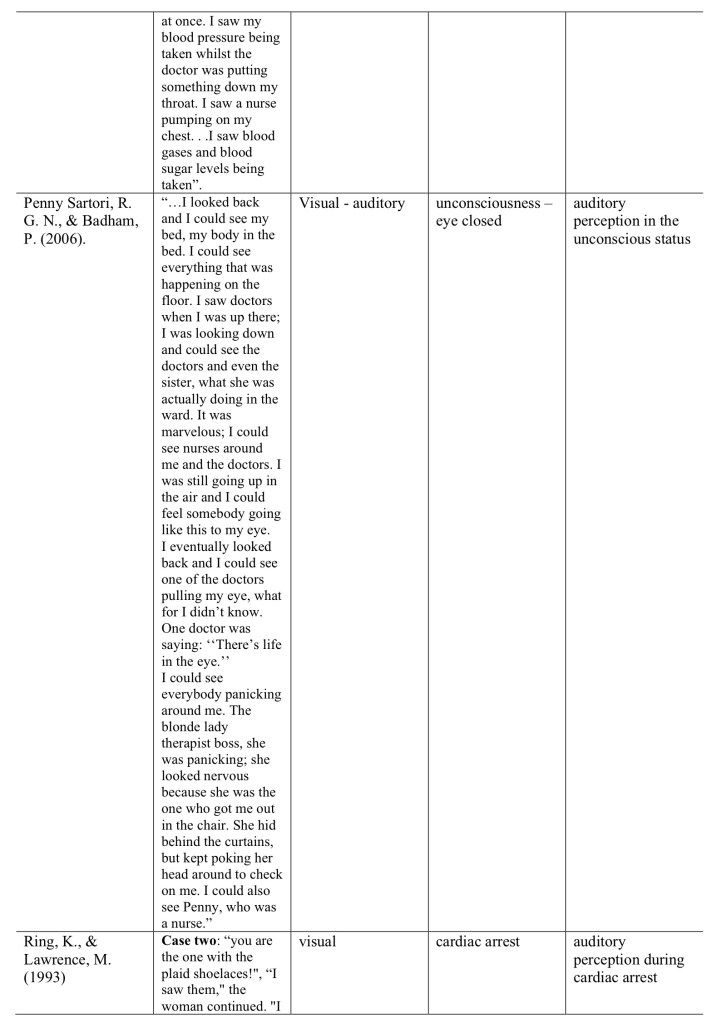
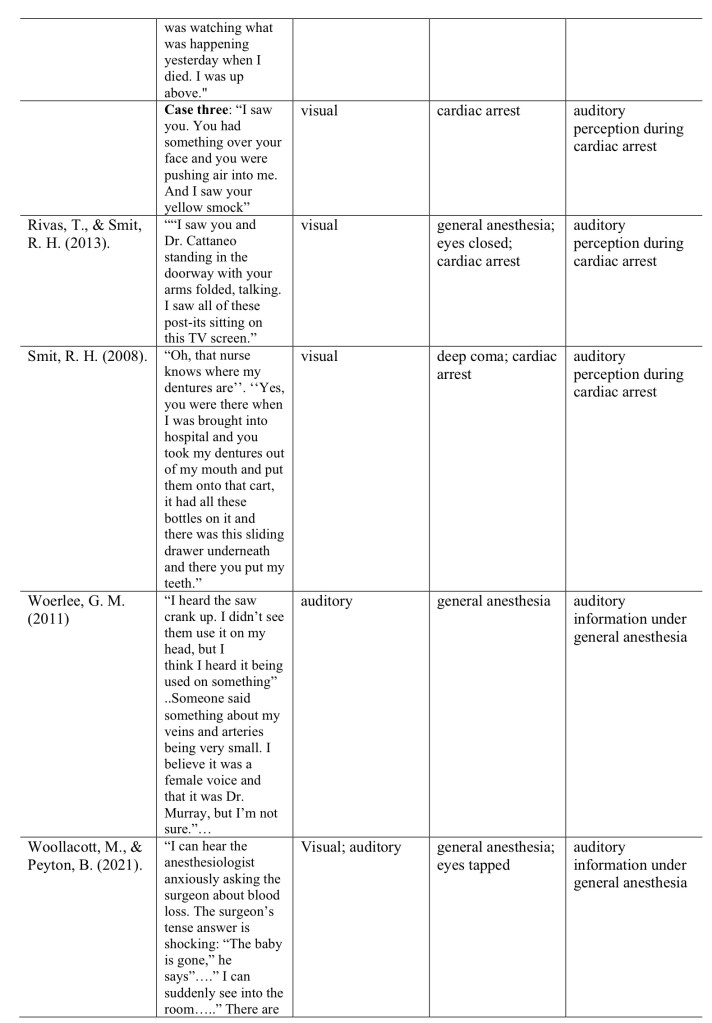
Photo by: Jose G. Ortega Castro

 deathPoints.com
Leave a comment